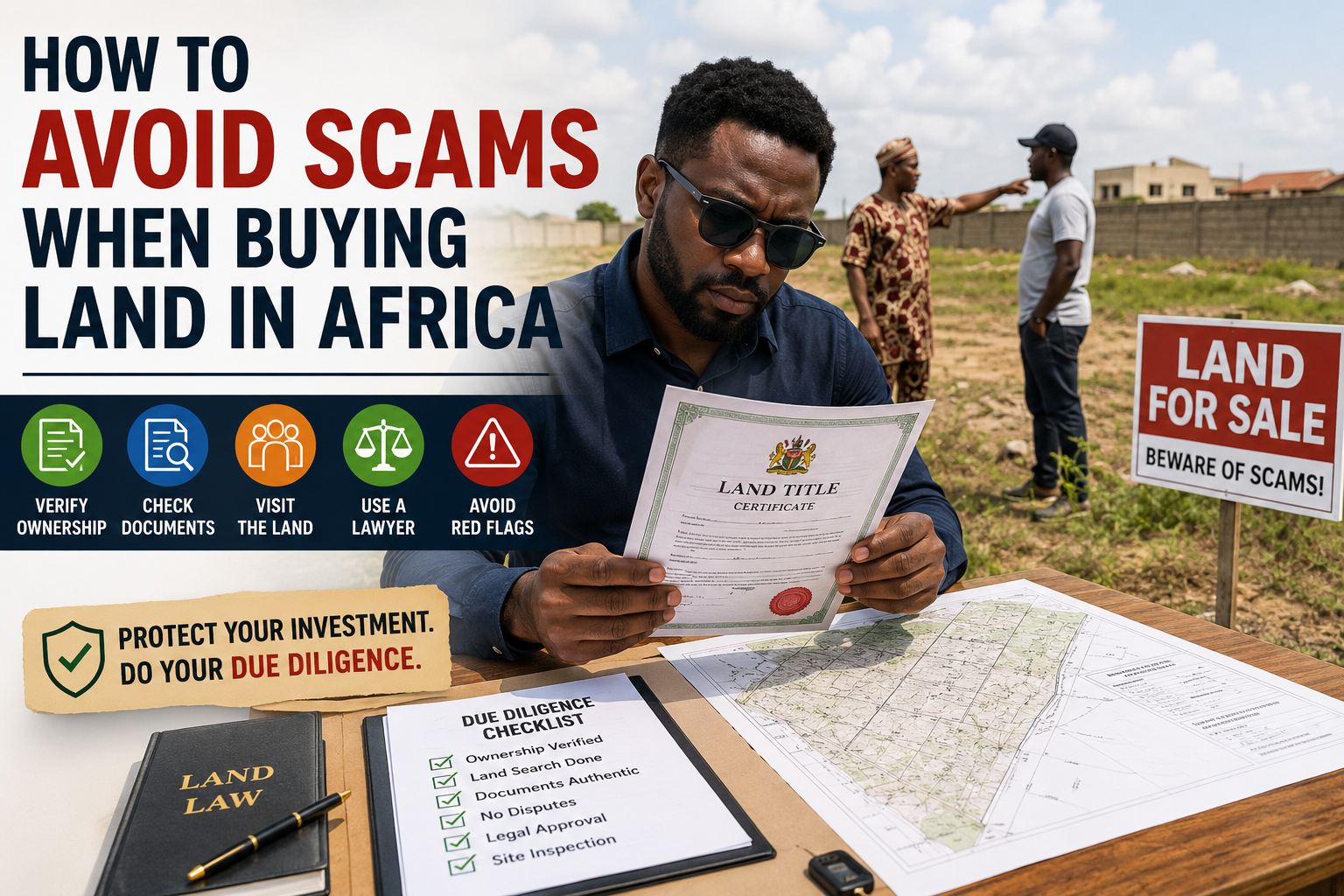
Buying land in Africa is a dream for many people living abroad. Whether you want to build a family home, start a business, retire peacefully, or invest in the future, land ownership often represents security and legacy.
But for many diasporans, that dream can quickly turn into a nightmare.
Stories of fake documents, double sales, land guards, family disputes, and disappearing agents are unfortunately common across many African countries. Every year, people lose thousands of dollars because they trusted the wrong person or skipped important verification steps.
The good news?
Most land scams are preventable if you approach the process carefully and professionally.
Why Land Scams Are So Common
Land ownership systems in many African countries can be complicated due to:
-
Incomplete digitization of records
-
Multiple ownership claims
-
Customary or family-owned lands
-
Weak enforcement systems
-
Informal sales processes
-
Corruption and forged documentation
Diasporans are especially targeted because scammers assume:
-
You are far away
-
You may not understand local land laws
-
You are eager to buy quickly
-
You may trust family or friends too easily
-
You have foreign income
That combination makes overseas buyers vulnerable.
Common Land Scams to Watch Out For
1. Selling the Same Land to Multiple Buyers
This is one of the most common scams.
A seller may sell one plot to several people at different times. By the time disputes arise, the scammer disappears.
2. Fake Land Documents
Fraudsters often forge:
-
Site plans
-
Indentures
-
Title certificates
-
Survey documents
-
Allocation papers
Some fake documents even appear official at first glance.
3. Family Land Disputes
A family member may sell land without the consent of the entire family or traditional authority.
Years later, other relatives suddenly appear claiming ownership.
4. “Land Guards” and Illegal Occupation
In some areas, criminal groups or unauthorized occupants take over land and demand money before construction can continue.
5. Fake Agents or Middlemen
Some agents pose as legitimate brokers but have no legal authority to sell the land.
They often pressure buyers to make quick payments.
How to Protect Yourself When Buying Land
1. Never Rush the Process
Scammers create urgency:
-
“Someone else is ready to buy.”
-
“The price will double tomorrow.”
-
“You must pay immediately.”
Take your time.
A legitimate land deal will still exist after proper verification.
2. Verify Ownership Independently
Do not rely only on what the seller tells you.
Always verify:
-
The actual owner
-
Existing disputes
-
Government records
-
Land registration status
-
Litigation history
Use independent professionals — not just people connected to the seller.
3. Hire a Trusted Lawyer
This step is critical.
A qualified property lawyer should:
-
Review all documents
-
Conduct land searches
-
Verify ownership
-
Draft agreements
-
Confirm legal transfer procedures
Trying to save money by skipping legal help can become extremely expensive later.
4. Conduct a Land Search
In many countries, land commissions or land registries allow ownership verification.
A proper land search can help identify:
-
Existing owners
-
Mortgages
-
Court disputes
-
Government acquisition issues
-
Duplicate claims
Never skip this step.
5. Visit the Land Physically
Photos and videos are not enough.
If possible:
-
Visit the property yourself
-
Talk to neighbors
-
Ask local community leaders questions
-
Confirm boundaries
-
Check for existing occupants
If you cannot travel, use someone highly trusted and independent to inspect the property.
6. Avoid Paying Large Cash Amounts
Keep records of every payment.
Use:
-
Bank transfers
-
Official receipts
-
Signed agreements
-
Verified company accounts
Avoid sending large amounts through informal channels without documentation.
7. Buy From Reputable Developers Carefully
Real estate developers can reduce some risks, but not all.
Before buying:
-
Research the company
-
Visit completed projects
-
Check reviews and complaints
-
Verify permits and approvals
-
Confirm infrastructure promises
A polished website does not guarantee legitimacy.
8. Understand the Local Land System
Different countries — and even different regions — may have:
-
Stool lands
-
Family lands
-
Leasehold systems
-
Government lands
-
Freehold restrictions
Understanding the local system helps you avoid dangerous assumptions.
Red Flags You Should Never Ignore
Walk away if:
-
The seller refuses verification
-
Documents seem inconsistent
-
The price is “too good to be true”
-
You are pressured to pay quickly
-
Multiple stories keep changing
-
The land is under dispute
-
Receipts are unofficial
-
You cannot confirm ownership clearly
Sometimes the safest investment is the deal you refused.
A Smarter Approach for Diasporans
Instead of rushing into purchases:
-
Research the market first
-
Build local professional connections
-
Use verified lawyers and surveyors
-
Start small if you are unsure
-
Focus on long-term strategy, not emotional pressure
Land ownership can create generational wealth — but only if done correctly.
Final Thoughts
Buying land in Africa can be one of the best investments you ever make.
But excitement should never replace due diligence.
Scammers thrive when buyers rely on trust alone instead of verification.
The safest land buyers are not the richest buyers — they are the most patient and informed.
Because in real estate, especially from abroad, protecting your money is just as important as owning the land.
Stay connected to the community
Explore more community stories and events and keep an eye on new activity across Diasfrica.
Pass it along
Share this with someone interested
If this story would help a friend, organizer, or someone in your community, send it their way.
Explore more on Diasfrica
Turn this story into your next plan
Follow the most useful next step: discover events, find trusted vendors, browse city guides, or bring your own listing into the community.
Related events
Move from reading into current event discovery.
Related vendors
Find businesses and services that match the topic.
City guides
Use local guides to explore city-level activity.
Community pages
Browse community hubs connected to this article.
Hosting something soon?
Publish the event so readers can discover it while interest is fresh.
Submit your eventRun a diaspora business?
List your business so event hosts and readers can find you.
List your business
Comments
Logged-in members can leave text-only comments. First comments may wait for moderation.
Loading comments...
Checking your sign-in status...